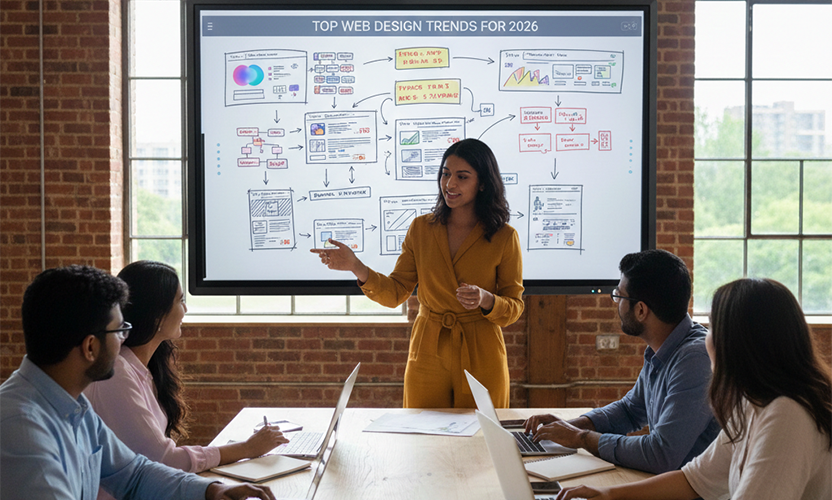
Web design is evolving at an incredible pace, and 2026 is set to bring trends that beginners must be aware of to stay competitive. The design landscape is no longer just about aesthetics, it’s about creating seamless user experiences, improving accessibility and integrating technology like AI to simplify the design process. For beginners, understanding the upcoming trends is essential to not only create visually appealing websites but also to ensure functionality, speed and engagement. Keeping up with trends allows new designers to make informed choices about layout, color palettes, interactive elements and overall user experience. It also helps them build websites that are future-ready, scalable and in line with industry standards, giving them a strong foundation for their web design journey.
AI-Driven and Automated Web Design
Artificial Intelligence is changing how web design is approached, especially for beginners. In 2026, AI-powered tools are becoming accessible to new designers, enabling them to automate layout generation, suggest color schemes and even adapt websites to different devices automatically. Platforms like AI website builders allow beginners to experiment and create professional-looking websites without deep technical knowledge. The biggest advantage of AI-driven design is speed and accuracy. Beginners can focus on creativity while AI handles repetitive or technical tasks such as coding responsiveness or image optimization. This integration of AI ensures that websites are not only modern in design but also optimized for user experience, accessibility and performance.
Minimalist and Mobile-First Design
Minimalism continues to dominate Website Design because it emphasizes clarity, speed and usability. In 2026, mobile-first design will remain a standard approach as the majority of users access websites on mobile devices. Beginners should focus on creating clean layouts, concise content and intuitive navigation. Minimalist design reduces distractions and highlights essential content, making it easier for visitors to engage and convert.Mobile-first design ensures that websites perform seamlessly on smaller screens. For beginners, this means prioritizing responsive layouts, touch-friendly buttons and lightweight visuals. By combining minimalism with mobile-first principles, new designers can create websites that are fast, user-friendly and appealing across all devices.
Interactive UI/UX and Micro-Interactions
Websites in 2026 are becoming more interactive and micro-interactions play a huge role in engaging users. These are subtle animations or responses that guide users, provide feedback or make navigation enjoyable. Beginners can add hover effects, animated buttons, scrolling transitions or interactive forms to enhance user experience without overwhelming the design. Interactive design encourages engagement and retention, making websites feel alive and dynamic. Beginners should focus on subtle, purposeful interactions that improve usability while reinforcing the brand’s personality. Learning to implement these features effectively is crucial for creating modern, professional-looking websites.
Sustainable and Eco-Friendly Web Design
Sustainability is emerging as an important consideration in web design. Eco-friendly websites reduce energy consumption, optimize performance and improve accessibility. Beginners should learn to create lightweight websites with optimized images, efficient code and sustainable hosting solutions. This not only contributes to environmental responsibility but also improves website speed and SEO performance. Sustainable design in 2026 also involves making websites more inclusive and accessible to diverse audiences. Beginners who adopt these practices will build websites that are responsible, efficient and aligned with future industry standards.
Conclusion
Understanding and applying these trends-AI-driven design, minimalist mobile-first approaches, interactive UI/UX and sustainable practices will give beginners a significant advantage in 2026. Experimentation, continuous learning and adopting modern tools are key to staying relevant in the ever-evolving web design landscape.With guidance from experts like Marctech Academy, beginners can master these trends effectively. Marctech Academy offers training, resources and practical insights that help new designers build professional websites while understanding the complex of modern web design trends. Leveraging such expertise ensures beginners stay ahead, create high-quality websiteschatg and accelerate their learning curve in web design.
FAQs
What are the top web design trends beginners should follow in 2026?
The top trends include AI-driven design, minimalist mobile-first layouts, interactive UI/UX and sustainable websites.
How can beginners create mobile-first and minimalist websites?
By prioritizing responsive layouts, concise content, fast-loading visuals, clean and intuitive designs.
Which AI tools are beginner-friendly for web design in 2026?
AI website builders, automated layout generators and AI-powered design assistants simplify the creation process for beginners.
How can new designers implement interactive and eco-friendly elements?
They can use subtle animations, hover effects, optimized media, lightweight code and sustainable hosting to enhance user experience responsibly.