
The way businesses reach customers has changed dramatically over the last decade. Traditional offline marketing methods like newspapers, billboards, flyers and TV ads once dominated the marketing world. However, today digital marketing has grown at a much faster pace and is now the preferred choice for businesses of all sizes. This shift is not accidental, it is driven by changing consumer behavior, better technology, measurable results and the need for cost-effective growth. Understanding why Digital Marketing has grown compared to offline marketing helps businesses make smarter decisions in an increasingly competitive market.
Changing Consumer Behavior in the Digital Era
One of the biggest reasons digital marketing is growing faster than offline marketing is the way consumers behave today. People spend a significant portion of their time online, searching on Google, scrolling through social media, watching videos and shopping on e-commerce platforms. Before making a purchase, customers now research products, read reviews, compare prices and look for recommendations online. Offline marketing struggles to influence these decision-making moments because it cannot engage customers when they are actively searching for solutions.
Digital marketing aligns perfectly with modern consumer habits. Businesses can reach people exactly when they are looking for information, whether through search engines, social media ads or content marketing. This makes digital marketing more effective than traditional marketing, as it connects brands with users at the right time and place. As consumer attention continues to shift online, offline marketing naturally loses impact, leading businesses to invest more in digital channels.
Cost Effectiveness and Better ROI Compared to Offline Marketing
Another major reason why businesses prefer digital marketing over offline marketing is cost efficiency. Traditional marketing methods often require high upfront investments with limited flexibility. Printing flyers, running newspaper ads or booking TV commercials can be expensive, especially for small businesses. Even after spending large budgets, it is difficult to measure how many people actually engaged with the advertisement.Digital marketing on the other hand, offers flexible budgeting and better control over spending. Businesses can start campaigns with small budgets, test performance and scale only what works. Online marketing platforms provide detailed insights into clicks, impressions, conversions and return on investment. This ability to track performance makes digital marketing more cost effective compared to offline marketing. As companies focus more on measurable growth and profitability, digital marketing naturally becomes the smarter choice.
Targeted Reach, Personalization and Measurable Results
Digital marketing has grown rapidly because it allows precise targeting and personalization, something offline marketing cannot match. Businesses can target audiences based on age, location, interests, online behavior and even purchase intent. This ensures marketing messages reach the most relevant users instead of a broad, uninterested audience. Personalized ads and content create stronger engagement and improve conversion rates.Another advantage is real-time performance tracking. Businesses can monitor campaigns instantly and make data-driven decisions to improve results. This level of control explains why digital marketing works better than traditional marketing. Offline marketing lacks accurate tracking, making it difficult to understand what works and what doesn’t. The ability to optimize campaigns continuously is one of the strongest reasons digital marketing continues to outperform offline marketing.
Digital Marketing Growth for Small and Local Businesses
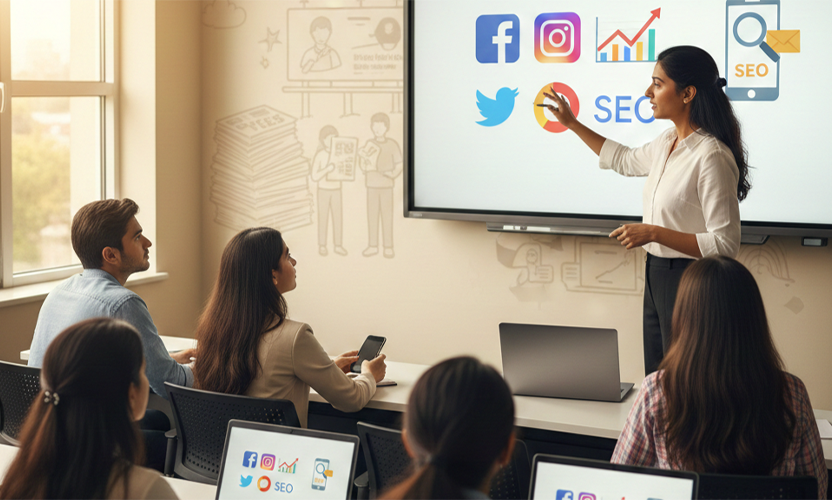
Digital marketing has also grown because it levels the playing field for small and local businesses. In traditional marketing, large brands with bigger budgets had a clear advantage. Small businesses often struggled to compete due to high advertising costs. Digital marketing changes this completely by offering affordable tools like Local SEO, social media marketing and online advertising. Local businesses can now reach nearby customers through search results, maps and social platforms without spending huge amounts of money. This is why digital marketing is especially beneficial for small businesses and startups. As more entrepreneurs recognize these advantages, the shift from offline to digital marketing continues to accelerate, further reducing reliance on traditional methods.
Conclusion
Digital marketing has grown compared to offline marketing because it matches how people live, search and buy today. With better targeting, lower costs, measurable results and scalability, it delivers far greater value than traditional marketing methods. While offline marketing still has its place in specific scenarios, businesses can no longer rely on it alone to drive consistent growth.
For individuals and businesses looking to build strong digital skills and stay competitive, learning the right strategies is crucial. Institutes like Marctech Academy play an important role by offering practical digital marketing education that helps professionals and entrepreneurs adapt to this digital-first world. As technology evolves and online behavior continues to dominate, digital marketing will remain the driving force behind modern business growth.
FAQs
Why is digital marketing growing faster than offline marketing?
Digital marketing is growing faster because it aligns with online consumer behavior, offers precise targeting and provides measurable results.
Is offline marketing still effective today?
Offline marketing can still be effective in certain situations, such as local branding or events, but it lacks tracking and flexibility.
Which marketing is better for small businesses, digital or offline?
Digital marketing is generally better for small businesses because it is affordable, scalable, and highly targeted. Small businesses can compete with larger brands using local SEO, social media and online ads without needing large budgets.
Can digital marketing completely replace offline marketing?
Digital marketing may not completely replace offline marketing, but it has become the dominant approach.